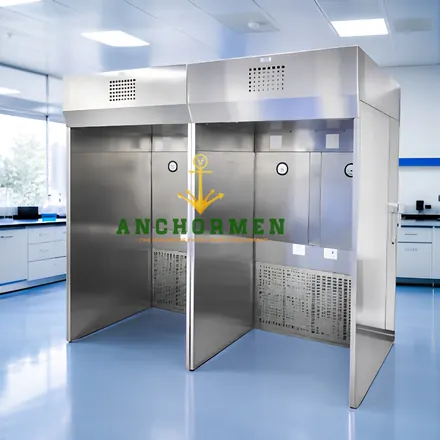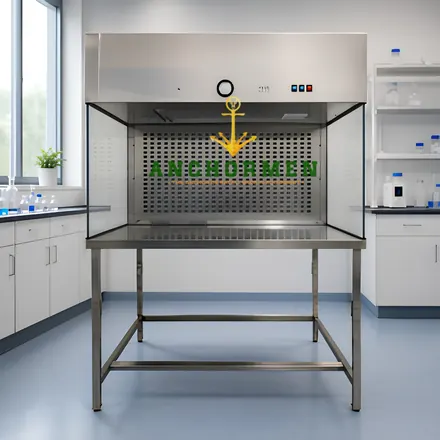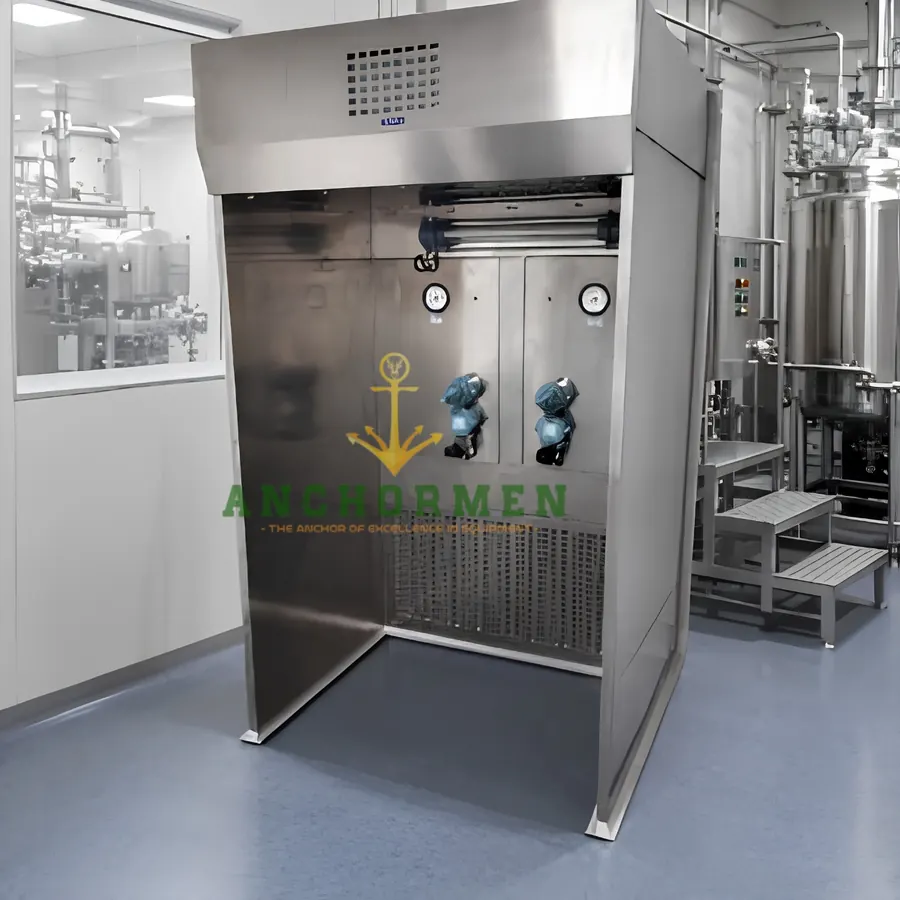
The handling of powders is very important in the pharmaceutical industry, and this involves sampling, weighing, and dispensing. If fine powders float in the air in the room, there could be possibilities of cross-contamination, wastage of materials, and even exposure of employees to the fine powders. Airflow is very important in controlling the powders. Selecting a reliable Reverse Laminar Air Flow Manufacturer helps facilities choose equipment that meets their operational and material-handling requirements.
Understanding the Working Principle
RLAF Technology is used in workstations where control of airborne particles is very important for material handling. Clean air flows vertically into the working zone and then exits at the bottom in dispensing and sampling booths. The airflow in such cases is designed in such a way that the airborne powder particles are trapped in the process.
There is a sub-turbulent airflow system with 30% air bleed to provide a controlled environment for the work to be done. Negative pressure is created through the exhaust system to prevent the escape of polluted air.
Powder Containment Through Controlled Airflow
During the process of pouring, moving, or weighing of the powder, some of the powder may become airborne. Without proper containment, the powder particles may
- Controlled Air Movement: Vertical down flow guides air through the working area towards the extraction point.
- Particle Extraction: The exhaust arrangement helps remove airborne contaminants from the workstation.
- Negative Pressure: Slight negative pressure helps reduce the movement of contaminated air into the surrounding environment.
- Air Filtration: HEPA filters capture fine airborne particles from the supply and exhaust air streams.
This allows for more hygienic material handling processes and reduces the chances of powder being carried over to other adjacent workstations.
Important Equipment Features
The effectiveness of a reverse laminar flow station depends on its design, filtration system and monitoring arrangements. For evaluation of the Reverse Laminar Air Flow Manufacturer by pharmaceutical companies, attention should be paid to equipment parameters rather than to its design only.
Key aspects are:
- HEPA H14 Filters for Supply and Exhaust: HEPA H14 filters help in particle collection and in creating an environment.
- Pre-filters: Pre-filters of the EU-6 class help in particle collection from the air to be filtered.
- Stainless Steel: SS 304/SS 316 provides high strength and easy-to-clean and disinfect surfaces.
- Air Velocity: In this case, air velocity is 0.45 ± 0.05 m/s below six inches of the grill. This parameter allows the customer to estimate the air-moving ability in the dispensing and sampling booth.
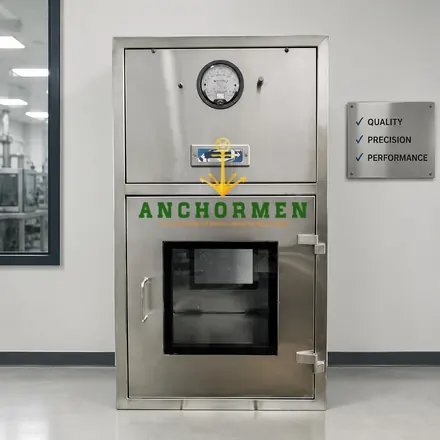
- Air Flow Monitoring: The application of the Magnehelic differential pressure gauge helps to manage the pressure difference in the filtration system.
- Blower with Variable Speed: Centrifugal or backwards-curved blower with variable speed.
- Design in Compliance with GMP: Smooth and accessible surfaces.
Industrial and Pharmaceutical Applications
RLAF is the perfect equipment for dealing with powders and materials in a manner that ensures they are handled with care. Some applications include:
- Pharmaceutical Manufacturing: Weighing and dispensing active ingredients and other raw materials.
- Sampling Areas: Collecting material samples for quality checks and laboratory testing.
- Chemical Processing: Handling powdered ingredients and materials in designated workstations.
- Food Processing: Supporting controlled handling of dry ingredients and powdered materials.
- Laboratories: Managing airborne particles during selected sampling and preparation activities.
The integrity of the substance depends upon the chemical nature of the material, its limit of exposure, and process conditions. The equipment to be used must be based on a proper risk assessment.
Conclusion
Laminar Air Flow technology is helpful for pharmaceutical and industrial firms for handling airborne particles while handling powders. The down flow technology and extraction, filtration, and pressure monitoring systems make sure that there is a clean working environment, and there are reduced possibilities of cross-contamination. Selecting the right equipment according to the requirements is very important for its effective use.
While selecting an appropriate Reverse Laminar Air Flow Manufacturer one should take into account various aspects like filtration efficiency, flow pattern, construction of equipment, etc. Anchormen Equipment Pvt. Ltd. manufactures RLAF dispensing and sampling booths.
FAQs
What is the purpose of a Reverse Laminar Air Flow system?
RLAF systems help in the control of airborne particles in activities like weighing, sampling, and dispensing of powders using airflow and filtration.
How do HEPA filters help in controlling powders?
HEPA filters capture the particles in the air as the air passes through them. This helps in reducing the flow of fine particles in the supply and exhaust air streams.
Where are RLAF systems used?
RLAF systems are used in pharmaceutical manufacturing industries, chemical processing industries, food manufacturing industries and others where powders need to be controlled.
Explore our Reverse Laminar Air Flow (RLAF)
RLAF unit manufacturer and supplier in India. Reverse laminar air flow booths with H14 HEPA, 0.45 m/s downflow and FLP options for dispensing and sampling.